Abalone pearls don’t look like any other kind of pearl. Their surfaces shift from green to violet to silver as the light moves, more like a tide pool than a traditional gem. I first encountered this small group of abalone pearls while searching through stones at the Tucson gem shows, drawn to their unusual color and natural form. The pearls I brought home come from the Pacific Ocean, and each one carries a quiet sense of movement that feels shaped by the sea itself.
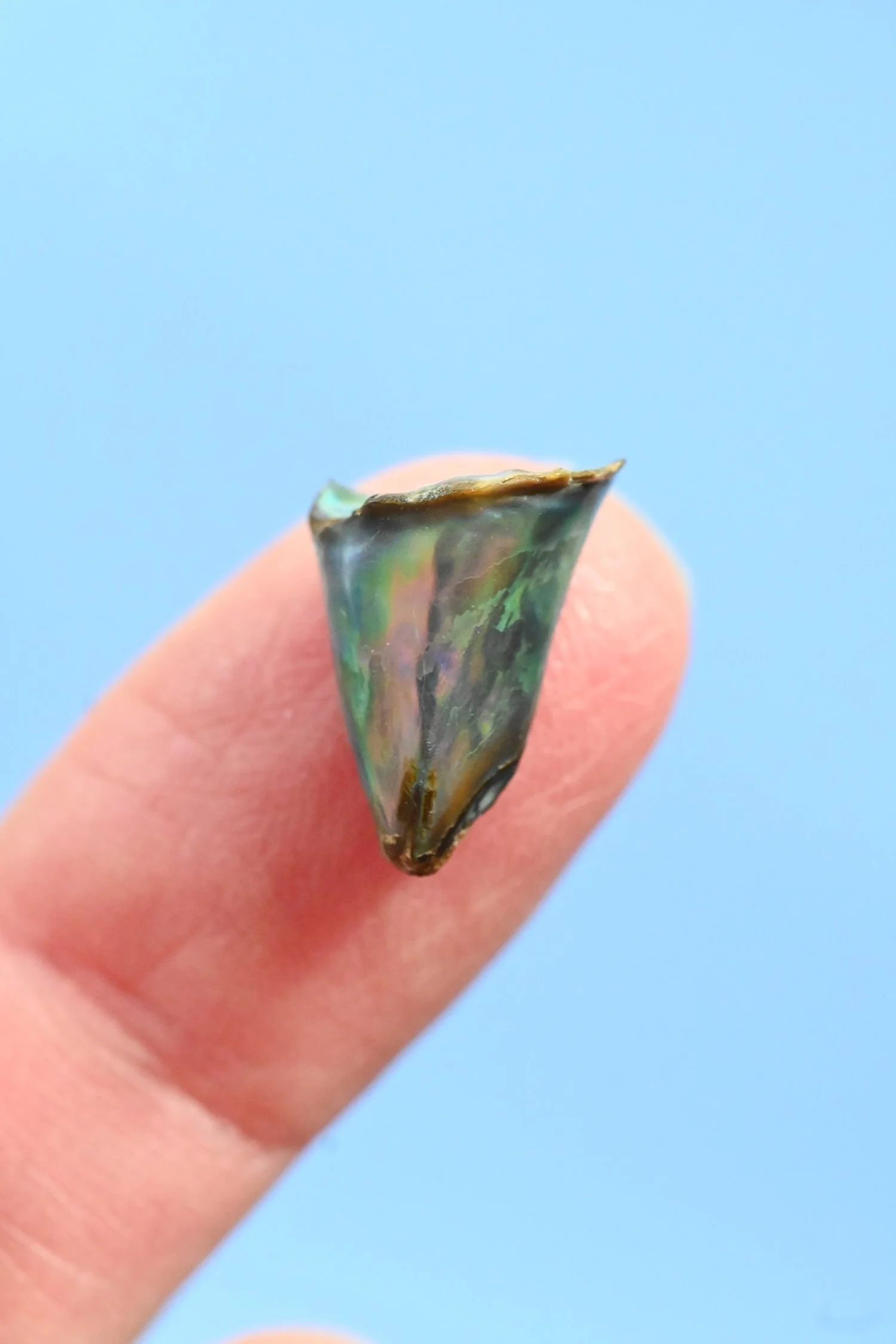
A traditional ‘horn’ or ‘tooth’ shaped abalone pearl.
Abalone pearls are among the rarest natural pearls in the world, formed entirely by chance inside wild abalone shellfish. Unlike cultured pearls, which are grown with human intervention, abalone pearls develop naturally over time as the mollusk responds to an irritation (usually a parasite) inside its shell. Layer upon layer of nacre builds slowly around the irritant, eventually forming a pearl whose shape reflects natural growth rather than symmetry. The result is organic and freeform, each pearl carrying its own structure and personality.
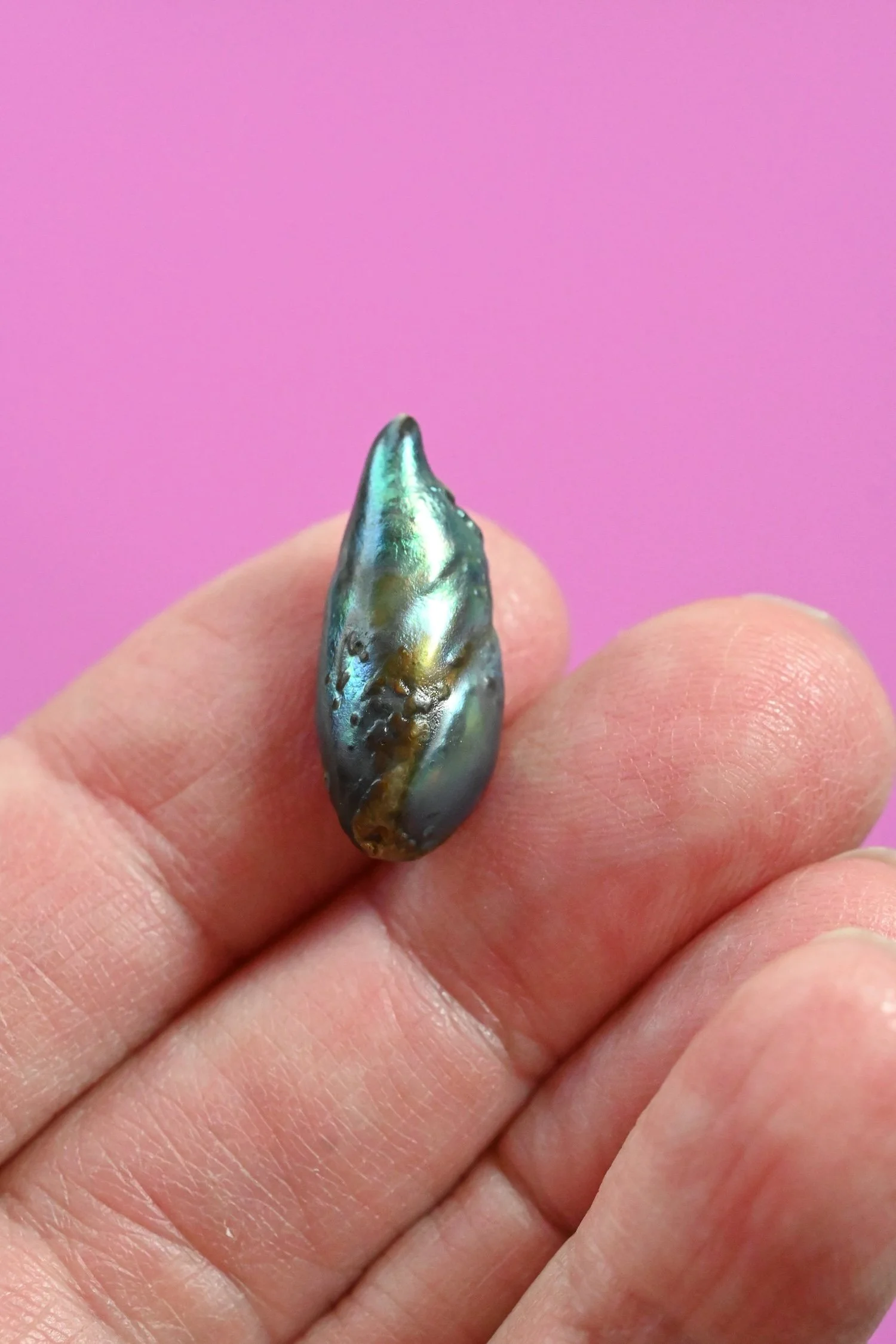
Their rarity comes not only from the difficulty of finding them but also from the conditions required for them to form. Only a small number of abalone produce pearls at all, and even fewer produce pearls with strong luster and stable surfaces suitable for jewelry. Finding a group of pearls that share a quality of color and character is uncommon, which makes sourcing them feel more like discovery than selection.
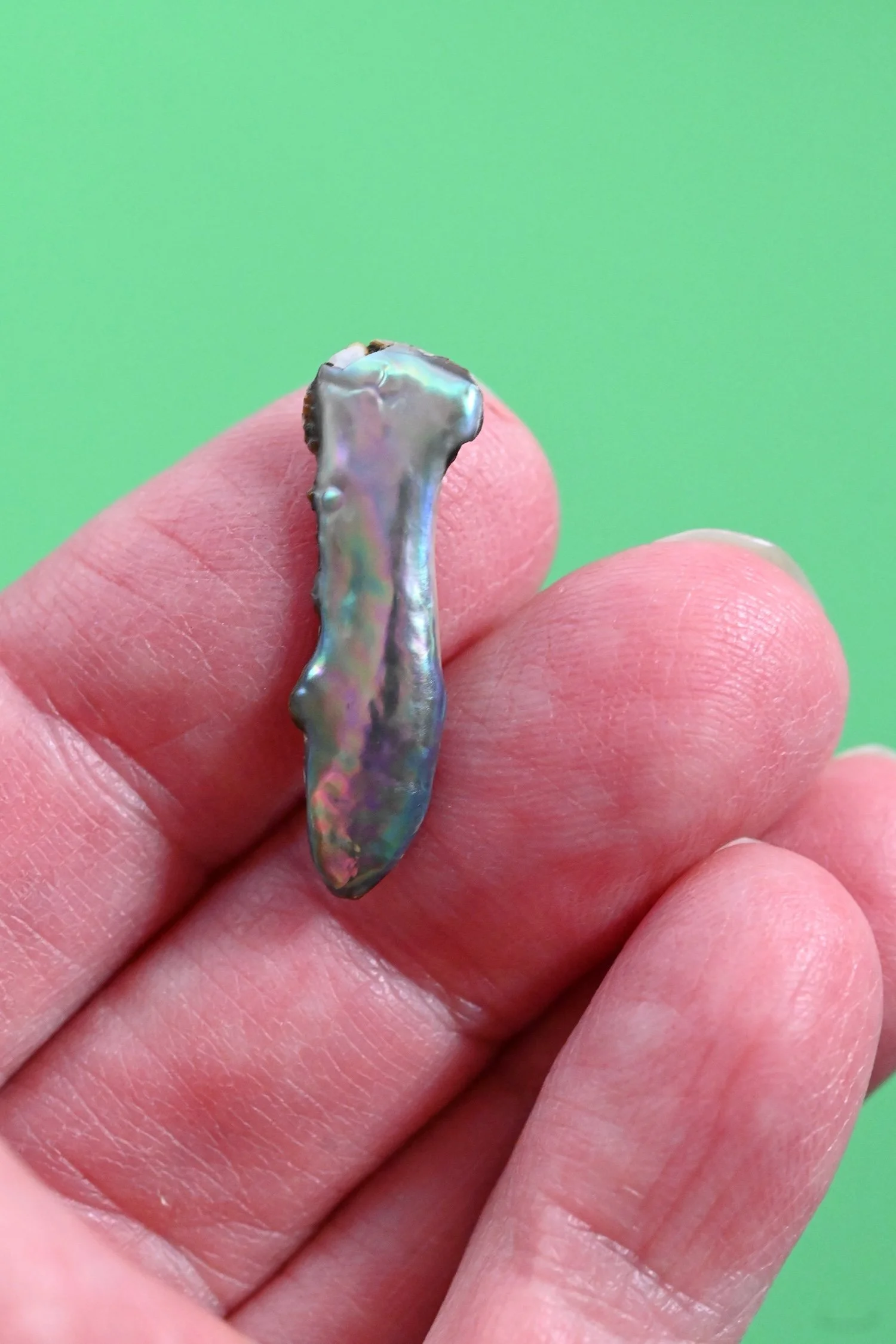
Abalone themselves live in coastal waters around the world, including parts of North America, Mexico, New Zealand, Australia, South Africa, and Asia. Different species and environments influence the colors and textures of the pearls they create. The pearls I selected in Tucson originate from Pacific waters, and their tones reflect that connection — saturated ocean greens, peacock blues, and flashes of violet that shift with the light.
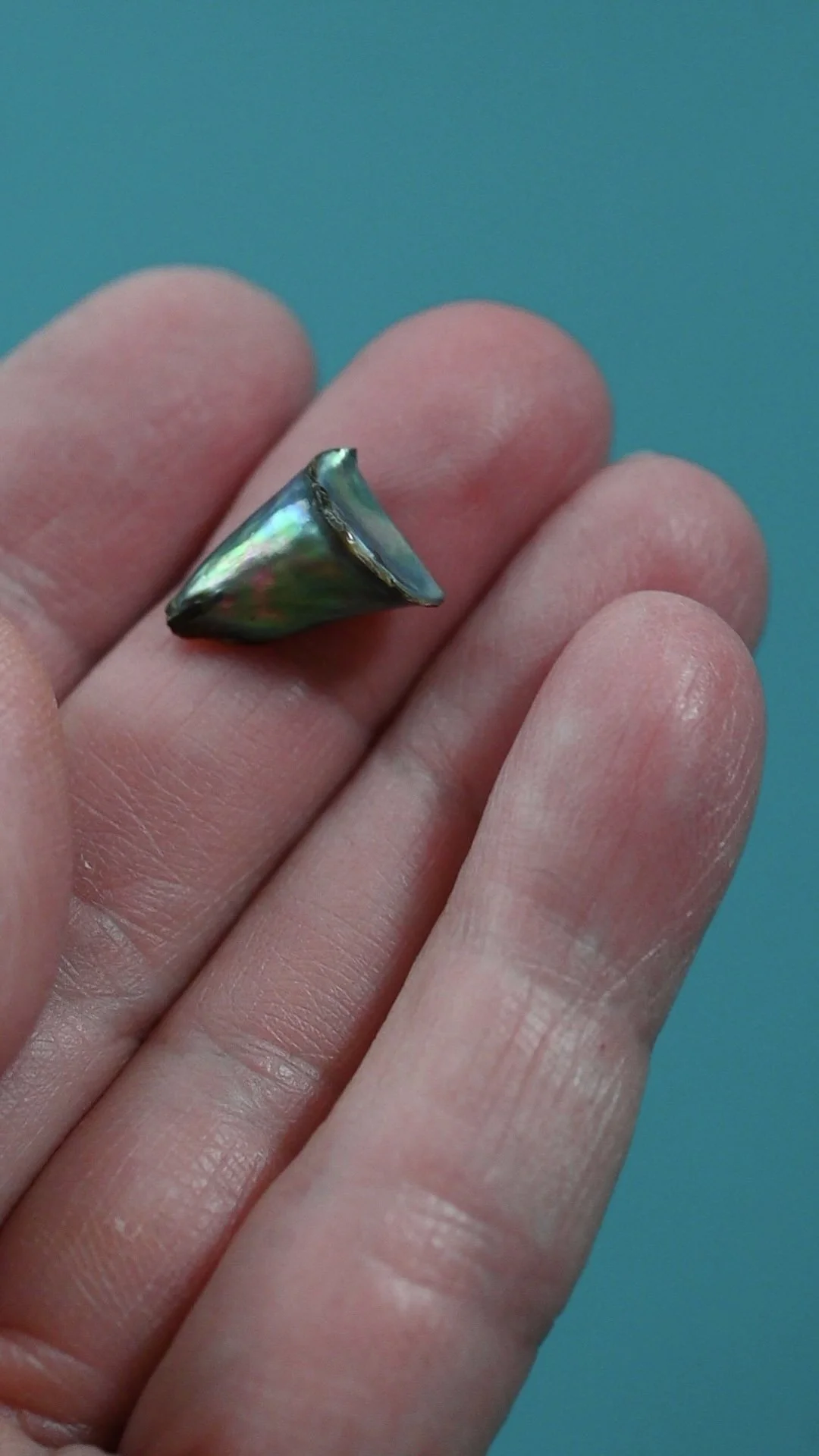
Part of what makes abalone pearls so compelling is their remarkable iridescence. Their colors are not pigments but optical effects created by microscopic layers of nacre. As light passes through and reflects between these layers, different wavelengths become visible, producing shifting tones that seem to change constantly as the pearl moves. This phenomenon, known as thin-film interference, gives abalone pearls a luminous quality that feels almost alive.
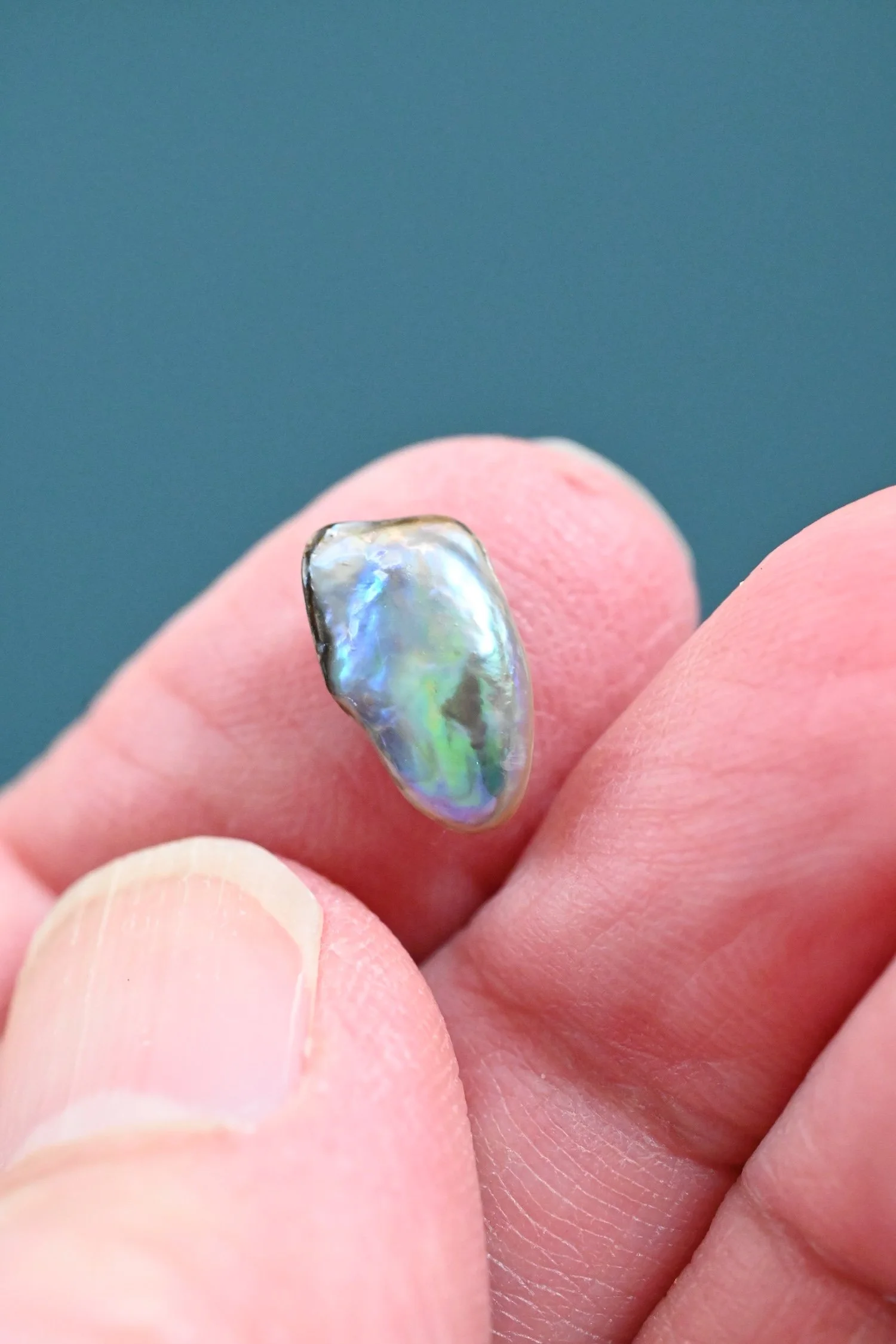
As a designer, I’m drawn to materials that suggest their own direction. Abalone pearls are never uniform, so each one asks for a different response. Rather than fitting them into predetermined designs, I allow the pearl’s shape and movement to guide the piece that surrounds it. The pearls I brought home from Tucson will become a small series of one-of-a-kind designs set in Fairmined gold, each one shaped by the individuality of the pearl itself.
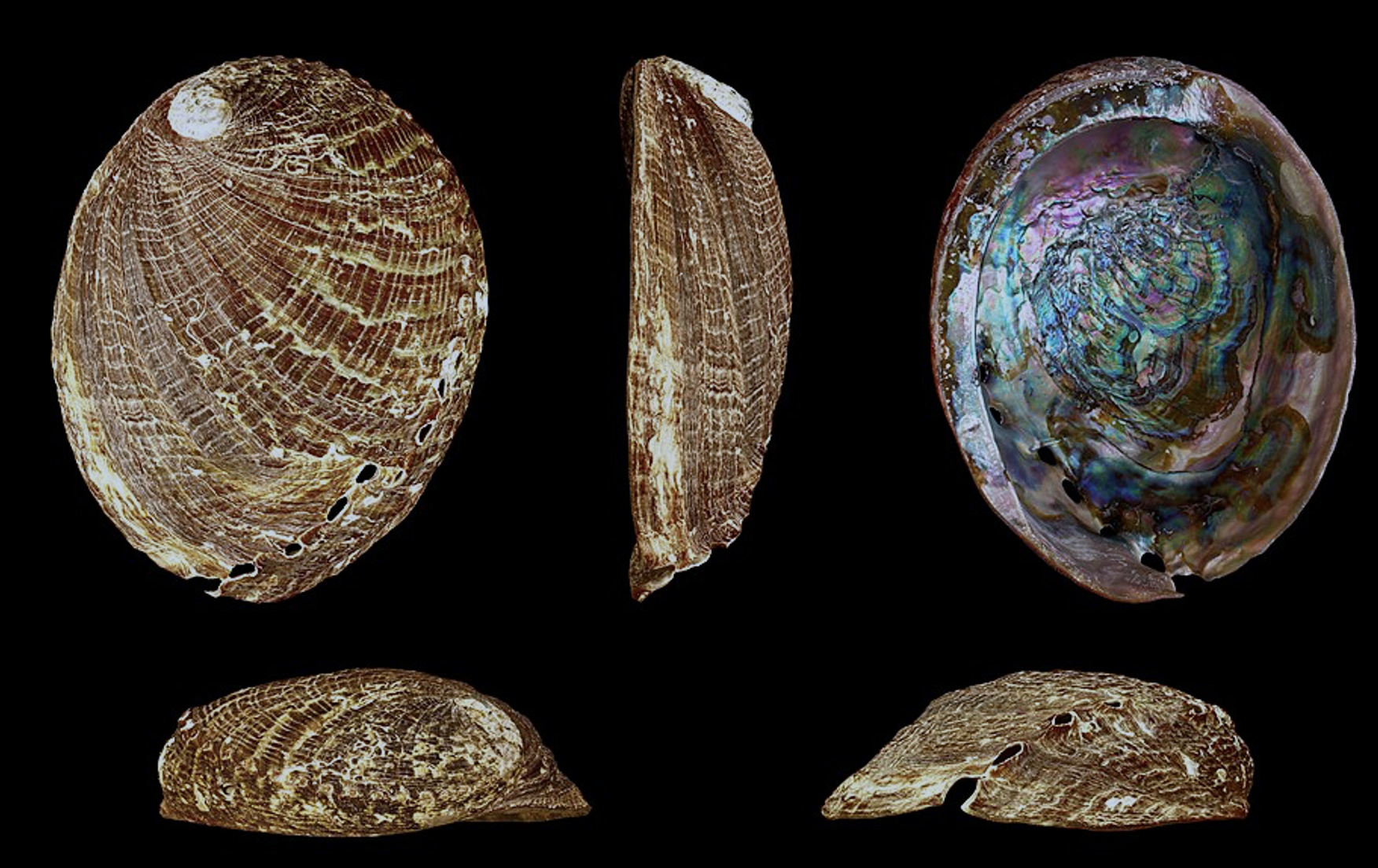
Green Abalone; Length 13 cm; Originating from Baja California, Mexico; Image Credit H. Zell, Wikipedia
These pearls feel less like manufactured gems and more like natural sculptures formed slowly by time and tide. Their rarity and shifting color make them unlike any other pearl, each one holding a small record of the environment in which it grew.
Over the coming months, I’ll be releasing pieces featuring these abalone pearls as they are completed. If one speaks especially to you, I’d be happy to reserve it for you.